Cheese factories use closed-circuit cooling towers primarily for hygiene and safety, precise temperature control, and stable operation. Open-circuit cooling towers cannot meet the food-grade sterility and temperature control requirements.
I. The Essential Need for Cooling in Cheese Making
Rapid Cooling After Sterilization (Critical): After pasteurization/UHT (72–75℃/15 seconds), raw milk must be rapidly and sterilely cooled to the fermentation temperature: 28–30℃ for mesophilic bacteria and 35–37℃ for thermophilic bacteria.
Instable Temperature: Poor fermentation bacteria activity, uneven acidity, and flavor/texture defects in the finished product.
Excessive Cooling Time: Bacterial proliferation, resulting in bitter cheese that spoils easily.
Curu/Shaping Cooling: After cutting, the curd needs temperature control (38→25℃). After shaping, it is rapidly cooled to below 25℃ in cold water below 15℃ to prevent uneven salt penetration during salting.
Curu/Shaping Cooling: Brine/Curing Temperature Control
Brine temperature: 4–10℃; Curing chamber: 2–8℃, requiring a continuous and stable cold source.
CIP Cleaning and Equipment Cooling
Cleaning solution needs cooling after Clean In-Place (CIP); sterilizers, heat exchangers, pumps, and other equipment generate heat during operation and require cooling to maintain stability.
✅ Absolutely Hygienic, Contamination-Free
The cooling medium (pure water/ethylene glycol) circulates within a closed coil, without contact with air or spray water, preventing dust/microorganisms/flying insects from entering, complying with food GMP and HACCP.
✅ Stable Temperature, Precise Temperature Control
Closed-Circuit cooling tower outlet water fluctuation ≤ ±0.5℃, stable throughout the year, unaffected by ambient temperature and humidity.
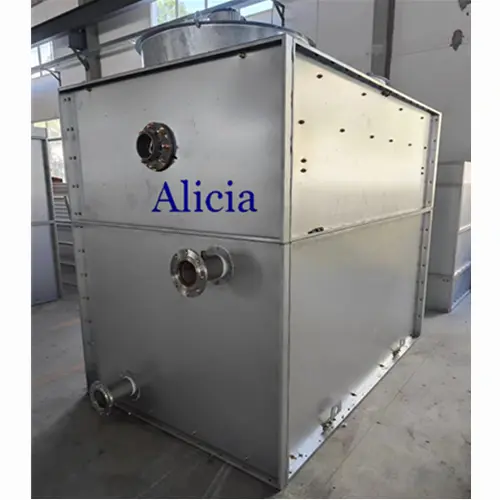
Open-type cooling towers: Highly susceptible to weather fluctuations, prone to problems during fermentation/curing.
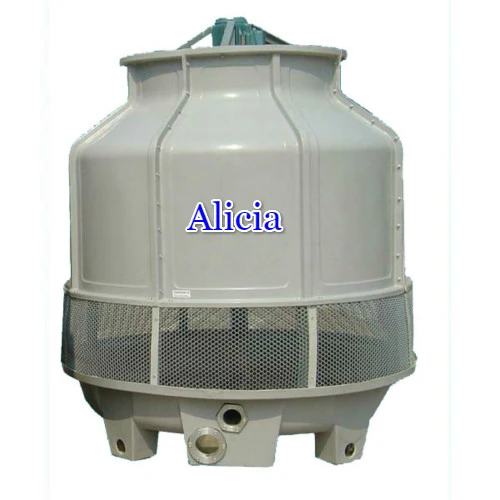
✅ Pure water, less scaling and corrosion: Closed-loop internal water circulation prevents scaling, algae growth, and corrosion; heat exchangers/plate heat exchangers are less prone to clogging, requiring less maintenance and resulting in a longer lifespan.
Open-type cooling towers: Prone to scaling and algae growth, requiring frequent cleaning and posing a high risk of downtime.
✅ Water-saving + Energy-saving + Environmentally friendly: Evaporation/rinsing losses are only 1/3–1/5 of open-type towers; heat can be recovered (preheating cleaning water); no water mist overflow, keeping the workshop dry.
III. Typical Configuration (Commonly Used in Cheese Factories)
Internal Circulation: Food-grade pure water/ethylene glycol (antifreeze), supplying plate heat exchangers, fermentation tank jackets, and cooling tanks.
External Circulation: Spray water + air, responsible for heat dissipation, not in contact with the product side.
Temperature Range: 25–35℃ (fermentation), 4–10℃ (brine), 2–8℃ (maturation).
IV. In short
cheese making is a process that requires high hygiene and precise temperature control. Closed-loop cooling towers are the only cooling solution that can simultaneously meet the requirements of sterility, constant temperature, and stable operation, directly determining the quality and safety of cheese. 
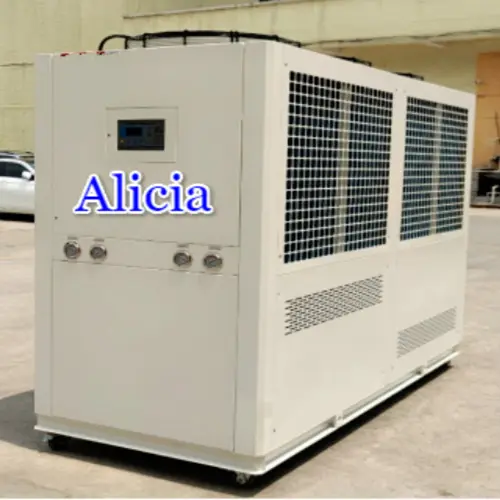 How are chillers used in the cosmetics manufacturing industry?
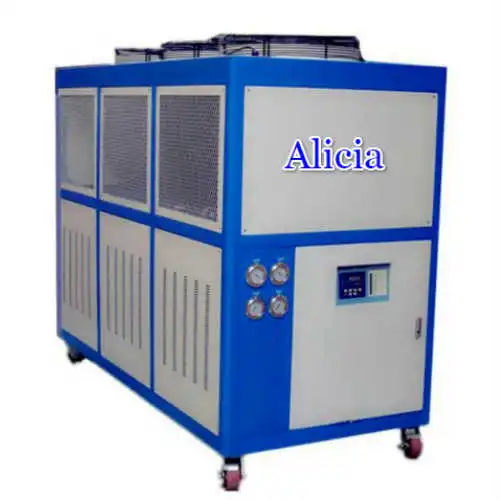 How are water chillers used in the detergent manufacturing industry?
 How are water chillers used in the soap manufacturing industry?


