I. Overall Principle:
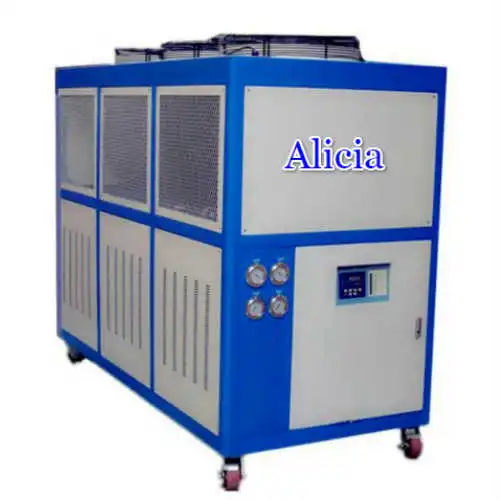
The chiller produces low-temperature chilled water, which is pumped to the indoor heat exchange terminal to remove heat from the facility. The water then flows back to the chiller for further cooling. This closed-loop water circulation maintains a constant temperature and humidity throughout the process, with no direct airflow.
II. Hatching Farm Usage + Process
1. Applicable Temperature Requirements
Incubation Room/Incubator: Constant temperature 37.5~38℃, water temperature commonly 13~18℃
2. Workflow
Cold water is pumped into the incubator's built-in cooling coil/hatching room fan coil unit.
Hot air passes through the cooling coil and is rapidly cooled, then evenly distributed into the hatching cart.
Warm water, having absorbed heat, returns to the chiller for further cooling and circulation.
The unit automatically starts and stops, precisely locking the hatching temperature; temperature difference ≤ ±0.3℃.
3. Advantages of Hatching Use
No direct airflow to hatching eggs, preventing embryonic death from cold.
Balanced temperature and humidity, significantly improving hatching rate and chick survival rate.
No temperature collapse in summer high temperatures; stable temperature throughout the hatching workshop.
The only stable heat dissipation solution for sealed hatching rooms.
III. Cooling Usage + Process for Adult Chicken Houses (Chicken Farms)
1. Applicable Temperature
Brooding house, rearing house, laying hen house: Summer temperature control 25~29℃
2. Two Mainstream Installation Methods
Method Method 1: Chiller with Cooling Coil + Circulating Fan (Preferred for Large-Scale Chicken Houses)
The chiller prepares 18-22℃ chilled water specifically for poultry farming.
Water-cooled pipes are laid on the top of the chicken house/aisle.
The circulating fan blows air over the chilled water pipes to cool the chicken.
Even cooling throughout the house, with no dead air zones.
Method 2: Chiller with Evaporative Cooling System (High-Temperature, High-Efficiency)
Chilled water is first introduced into the evaporative cooling pad pool to lower the water temperature.
Chilled air enters the chicken house, lowering the temperature by 3-5℃ compared to ordinary evaporative cooling pads.
Solve the problem of ineffective evaporative cooling and heat-related deaths of chickens during the hottest days of summer.
3. Actual Effects of Chicken House Cooling
Prevents heat stress in laying hens: no reduction in egg production, no soft-shelled eggs
Rapid weight gain and normal feed intake in broilers
Reduced mortality from respiratory diseases and heat exhaustion
Uniform temperature inside the house, with small temperature differences between the front and back cage layers.
IV. Differences between Incubators vs. Chicken Houses and Chillers
Different water temperatures
Incubators: Low-temperature water 12-18℃, precise temperature control
Chicken houses: Medium-temperature water Gentle cooling from 18-22℃, harmless to chickens
Temperature control precision
Incubation: High precision ±0.5℃
Chicken house: Standard ±1~2℃
Different terminal units
Incubation: Incubator with built-in cooling coils
Chicken house: Water-cooled exhaust system, fan coil units, cooling water curtains
V. Simple assembly (easy to understand)
Air-cooled chiller → Insulated water tank → Circulating water pump → Indoor cooling terminal → Return water circulates back to the chiller
VI. Core advantages (specifically for poultry industry)
Air-cooled models do not require cooling towers or large amounts of well water; suitable for any farm.
Energy-efficient than air conditioning; stable operation 24/7.
Gentle water vapor, non-drying, harmless to chicks and hatching eggs.
Water circulation can be switched for temperature adjustment in winter; suitable for all seasons.




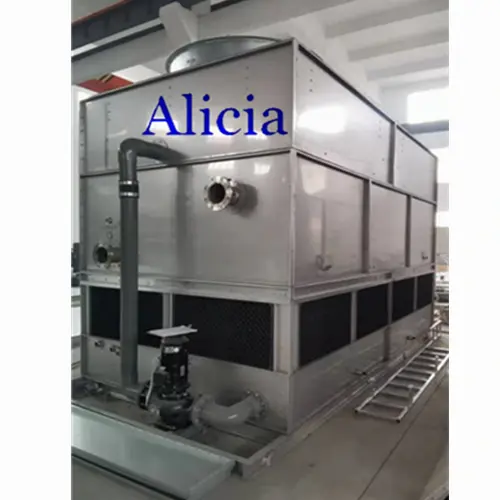 Why are closed-circuit cooling towers needed to make cheese?
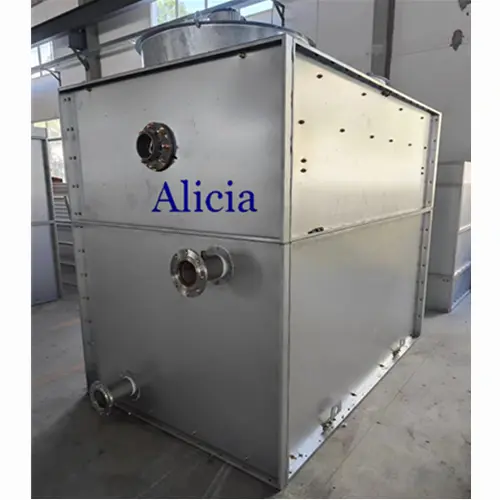 closed-circuit cooling tower systems for process cooling applications
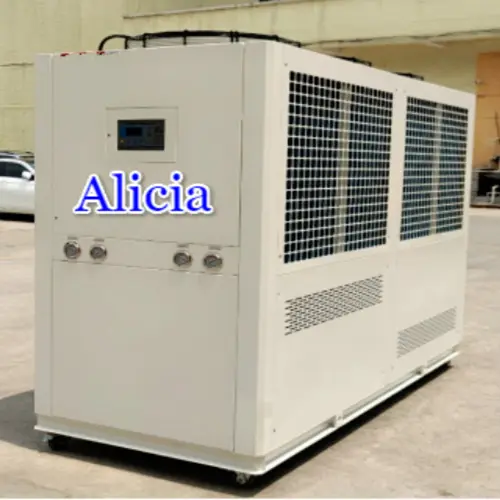 How are chillers used in the cosmetics manufacturing industry?


