Chillers are core temperature control equipment in the artificial leather (PU, PVC, etc.) manufacturing industry, operating through multiple key processes. Their role is to ensure product quality, improve production efficiency, and reduce energy consumption through precise temperature control. Based on the mainstream production processes of artificial leather, the specific application scenarios and principles of chillers are as follows:
I. Mainstream Production Processes and Temperature Control Requirements of Artificial Leather
The core production processes of artificial leather mainly include PU dry process, PU wet process, and PVC calendering process. Different processes have significantly different requirements for the precision and range of temperature control. Chillers need to provide low-temperature cooling water of 5~25℃ depending on the characteristics of each process. Some processes require the use of mold temperature controllers for coordinated temperature control.
II. Specific Applications of Chillers in Various Processes
1. PU Dry Process (Most Commonly Used, for Producing Thin Artificial Leather)
This process involves coating PU resin onto a base fabric or release paper, followed by drying, curing, and peeling to obtain the finished product. Chillers are mainly used in the following stages:
Release Paper Cooling and Shaping
After the release paper is coated with PU resin by the coating machine, it needs to enter a cooling zone for rapid cooling. The chiller, through cooling rollers or a cooling air system, reduces the surface temperature of the release paper from 80~120℃ to 30~40℃, allowing the PU resin to quickly gel and set, preventing uneven coating leveling, sticking to rollers, or pattern deformation.
✅ Key Function: Ensures clear transfer of the pattern from the release paper surface to the artificial leather, improving the product's appearance quality.
Coating Machine Roller Temperature Control
Key rollers such as the coating rollers and metering rollers of the coating machine need to be kept at a constant low temperature (15~25℃). The chiller circulates cooling water through internal channels in the rollers to prevent uneven surface temperature caused by friction or increased ambient temperature, thus avoiding premature curing of the PU resin during coating and ensuring uniform coating thickness.
Cooling at the Tail End of the Drying Chamber
After the PU coating cures in the drying chamber (100~160℃), it needs to be cooled at the tail end. The chiller provides low-temperature air or cooling plates to lower the temperature of the artificial leather to below 40℃, facilitating subsequent winding and cutting, and preventing product sticking and deformation caused by high-temperature winding.
2. PU Wet Process (Production of Thick, High-Elasticity Artificial Leather, such as Sofa Leather and Shoe Leather)
This process involves coating PU resin onto a base fabric and immersing it in a coagulation bath (DMF aqueous solution) for phase transformation, forming a porous structure. The core function of the chiller is to control the temperature of the coagulation bath:
Coagulation Bath Temperature Control:
The phase transformation rate of the PU resin in the coagulation bath directly determines the pore structure, feel, and physical properties of the artificial leather. Excessive temperature leads to rapid phase transformation, resulting in large pores and a harder product feel; excessively low temperature results in slow phase transformation and reduced production efficiency.
The chiller needs to precisely control the coagulation bath temperature between 15~25℃ (adjusted according to the product formula), circulating and cooling the coagulation bath solution through a heat exchanger to ensure uniform temperature throughout the bath and consistent pore structure for each batch of product.
DMF Recovery System Cooling:
The wet process generates a large amount of DMF waste gas, which needs to be recovered through a recovery system (distillation column). The chiller is used to cool the condenser of the distillation column, condensing gaseous DMF into liquid, improving recovery efficiency and reducing energy consumption.
3. PVC Calendering Process (Production of Rigid or Soft PVC Artificial Leather)
This process involves mixing PVC resin, plasticizers, etc., and then calendering the mixture into a film using multiple rollers in a calender. This film is then laminated with a base fabric. A chiller is primarily used for temperature control of the calender rollers:
The rollers of the calender (such as preheating rollers, calendering rollers, and cooling rollers) require strict temperature control. Specifically, the cooling rollers need to be supplied with low-temperature cooling water at 10~20℃ via a chiller to rapidly cool the calendered PVC film from 150~180℃ to below 40℃. This allows the PVC molecular chains to quickly solidify, preventing film shrinkage, deformation, or surface crystal points, ensuring the product's thickness accuracy and surface smoothness.
III. Key Selection Points for Chillers in the Artificial Leather Industry
Temperature Control Accuracy:
Precise temperature control within ±1℃ is required, especially for the coagulation bath in wet processes and the release paper cooling in dry processes. Temperature fluctuations directly affect product quality.
Cooling Capacity Matching:
Select a chiller with an appropriate cooling capacity based on production scale (e.g., coating width, production line speed) and number of processes (e.g., multiple coating machines, calenders). Typically, a single production line requires a 10-100HP chiller; for multiple production lines, a centralized chiller unit can be considered.
Corrosion Protection Requirements:
The coagulation bath in wet processes contains corrosive media such as DMF. If the chiller is in direct contact with this media, a 316L stainless steel heat exchanger must be used; for dry processes and PVC processes, 304 stainless steel or titanium alloy heat exchangers can be used.
Energy-Saving Design:
Variable frequency chillers are preferred, as they automatically adjust cooling capacity according to production line load changes, reducing operating energy consumption.
IV. Core Value of Chiller Use
Ensuring Product Quality:Precise temperature control avoids uneven coating, surface defects, and dimensional deformation, improving the feel, appearance, and physical properties of artificial leather.
Improving Production Efficiency:Rapid cooling and shaping shortens process time, such as the phase transformation time in wet processes and the drying and cooling time in dry processes.
Reduced Production Costs:Cooling via a DMF recovery system improves solvent recovery rates and reduces raw material waste; variable frequency chillers can reduce energy consumption by 20%~30%.
In artificial leather production, chillers are often used in conjunction with other plastic auxiliary equipment:
Water Chiller + Mold Temperature Controller: Some processes (such as the preheating roller of the coating machine) require high temperatures. The mold temperature controller provides high-temperature heat transfer oil, while the chiller cools the waste heat from the mold temperature controller, achieving energy recycling.
Water Chiller + Plastic Crusher: Scrap materials generated during production need to be crushed and recycled using a plastic crusher. The chiller cools the crusher's cutter rollers, preventing PVC/PU materials from melting and sticking together due to high frictional temperatures.



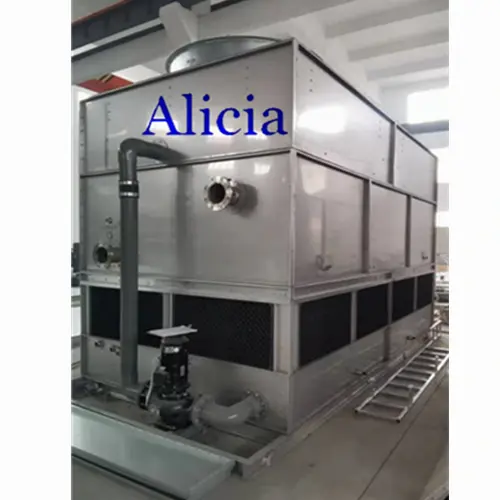 Why are closed-circuit cooling towers needed to make cheese?
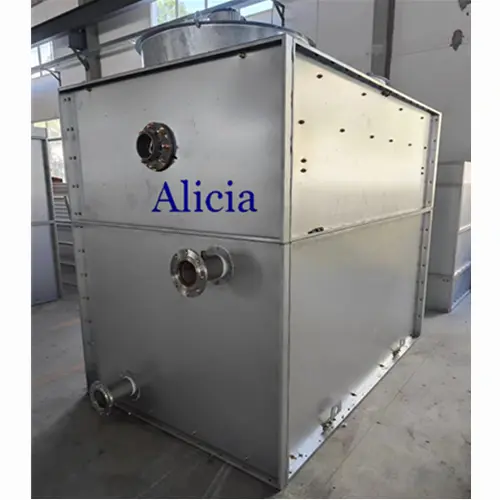 closed-circuit cooling tower systems for process cooling applications
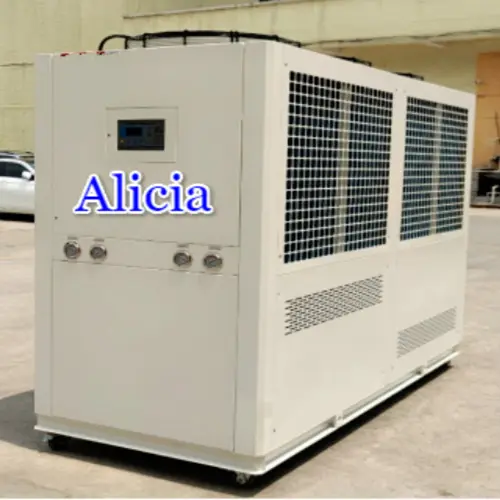 How are chillers used in the cosmetics manufacturing industry?
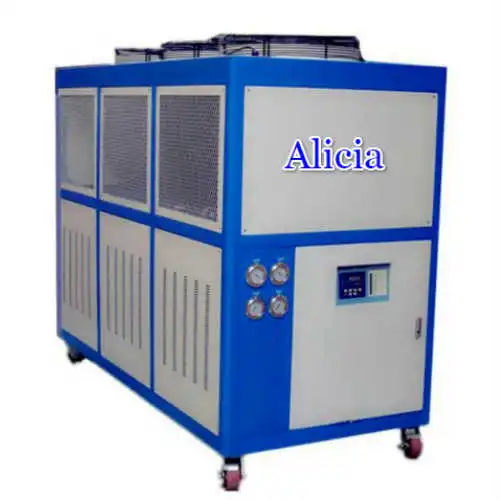 How are water chillers used in the detergent manufacturing industry?


