We use cookies to improve your online experience. By continuing browsing this website, we assume you agree our use of cookies.

How often should the cooling water be replaced in an MRI chiller?

Views : 2856
Update time : 2025-03-12 16:04:22
How often should the cooling water be replaced in an MRI water chiller?
The frequency of cooling water replacement in an MRI water chiller depends on several factors, such as the quality of the incoming water, the operating environment, and the specific requirements of the MRI water chiller. Generally, it is recommended to replace the cooling water every 6 - 12 months. However, in some cases, more frequent replacement may be necessary:
  • If the water quality is poor: If the incoming water has a high level of impurities, such as dirt, sediment, or dissolved minerals, it can cause scale formation, corrosion, and fouling in the MRI water chiller system. In such cases, more frequent water replacement, perhaps every 3 - 6 months, may be required to maintain the efficiency and reliability of the MRI water chiller.
  • In a harsh operating environment: If the MRI water chiller is located in a dusty, dirty, or high - humidity environment, the cooling water may become contaminated more quickly. Additionally, if the MRI water chiller operates at high temperatures or under heavy - load conditions for extended periods, the water quality can degrade faster. In these situations, it is advisable to shorten the water replacement interval to 6 - 9 months.
  • According to the manufacturer's recommendations: Different MRI water chiller models may have specific requirements for cooling water replacement. It is essential to follow the manufacturer's guidelines provided in the operating manual. Some manufacturers may recommend more frequent replacement, especially for MRI water chillers with more sensitive components or advanced cooling technologies.    
    chiller for MRI system, MRI equipment chillers
    What are the signs that indicate the cooling water in an MRI water chiller needs to be replaced?
      • Visible contamination: If the cooling water appears cloudy, discolored, or has visible particles floating in it, it is a clear sign that the water is contaminated and needs to be replaced. Cloudiness or discoloration can be caused by the buildup of dirt, rust, or biological growth in the water.
      • Scale formation: Check the inner surfaces of the MRI water chiller's cooling coils, pipes, and heat exchangers. If there is a visible buildup of scale, which looks like a white or grayish - colored crust, it indicates that the water has a high concentration of dissolved minerals. Scale can reduce the heat transfer efficiency of the MRI water chiller and lead to overheating.
      • Signs of corrosion: Inspect the metal components of the MRI water chiller that come into contact with the cooling water for signs of corrosion, such as rust spots, pitting, or a rough surface texture. Corrosion can be caused by factors like a high - acidity level in the water or the presence of certain chemicals. If left untreated, corrosion can damage the components and lead to leaks.
      • Increased pressure drop: A significant increase in the pressure drop across the MRI water chiller's cooling system can be a sign of clogged filters, scale - coated heat exchangers, or other restrictions in the water flow. These issues can be related to poor water quality and may indicate that the cooling water needs to be replaced and the system cleaned.
      • Reduced cooling efficiency: If the MRI water chiller is having difficulty maintaining the required cooling temperature for the MRI system, it could be due to poor heat transfer in the cooling system. This can be caused by dirty or degraded cooling water that is no longer effectively absorbing and dissipating heat.
      • Unusual odors: A foul or unusual odor coming from the cooling water can indicate the presence of bacteria, mold, or other biological growth. This not only affects the performance of the water chiller but can also pose a health risk if the water vapor is released into the surrounding environment.
       
    Related News
    Read More >>
    Why are closed-circuit cooling towers needed to make cheese? Why are closed-circuit cooling towers needed to make cheese?
    May .29.2026
    Cheese factories use closed-circuit cooling towers primarily for hygiene and safety, precise temperature control, and stable operation. Open-circuit towers cannot meet the food-grade sterility and temperature control requirements.
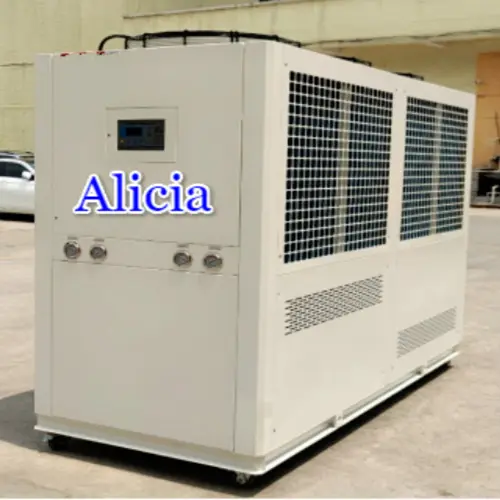
    closed-circuit cooling tower systems for process cooling applications closed-circuit cooling tower systems for process cooling applications
    May .28.2026
    Industrial closed‑circuit cooling tower systems are ideal for applications requiring fluid purity, precise temperature control, and reduced water/chemical usage—especially in chemical, food, pharmaceutical, manufacturing, and data center industries.
    How are chillers used in the cosmetics manufacturing industry? How are chillers used in the cosmetics manufacturing industry?
    May .16.2026
    The core functions of chillers in the cosmetics industry are precise temperature control, rapid cooling, and constant temperature preservation, covering four major stages: emulsification/reaction, extraction, filling, and equipment cooling. These directly determine product activity, stability, and production efficiency.
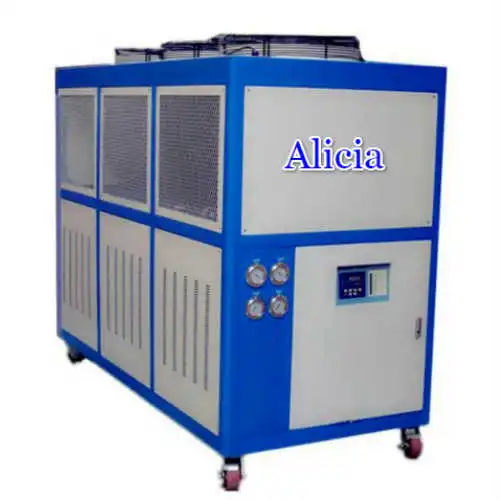
    How are water chillers used in the detergent manufacturing industry? How are water chillers used in the detergent manufacturing industry?
    May .16.2026
    The core functions of chillers in detergent production are precise temperature control, ensuring reaction stability, cooling materials, protecting equipment, and stabilizing formulations. They cover the entire process from synthesis, ingredient mixing, homogenization to filling/molding, directly determining product stability and yield.
    pop_close
    pop_main
    Stay In The Know
    Enter your email to hear from us about Product list, Latest Products and Customer application examples!