


How to choose the right model of chiller for pipe and profile extruder?
The pipe or wire extruder does not have high requirements for temperature control. The temperature control range is generally 10 ~ 25 °C. The temperature control accuracy of ±1 °C for general industrial chillers can fully meet its temperature control requirements; infrastructure engineering pipes and corrugated In the production of pipes, due to its low temperature control requirements, the cooling water can be kept at 30-50 °C. At this time, there is no need to use a chiller, and a cooling water tower or a cooling pool can be used to cool the circulating water.

Industrial chillers are widely used in pipe extrusion, wire extruders and pelletizers. They are mainly used for cooling water tanks. So what problems should we pay attention to when matching chillers for extruders?
1. Calculation of cooling capacity of chiller for extruder
Just like the cooling capacity calculation method used in other industrial chillers, the cooling capacity of the extruder chiller is also calculated by the heat brought in by the material. Usually, the following data needs to be known:
- What is the output of the extruder per hour
- Specific heat of extruded material
- Extrusion temperature of the material
- Controlled temperature of cooling water tank
- Actual capacity or size of cooling tank
With these data, we can apply the formula to calculate the cooling capacity.
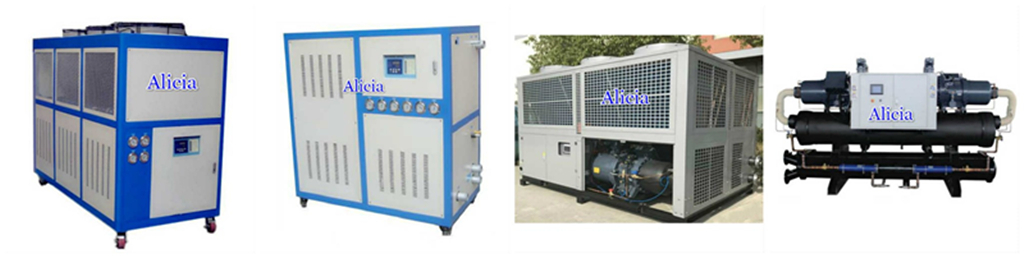
2. Evaporator selection
The water in the cooling water tank needs to be cooled down during the extrusion process of the pipe. Under normal circumstances, the position of the cooling water tank is higher than that of the chiller. At this time, we cannot choose the chiller structure of coil type evaporator + water tank to avoid the water in the water tank flowing back to the water tank of the chiller after the pump stops working. Cause overflow, but should choose shell and tube evaporator, shell and tube evaporator is a closed loop, there will be no overflow problem.
Some pipeline extruders are equipped with hydraulic modules. In this case, the chiller for the extruder directly cools the hydraulic module, and a shell-and-tube evaporator should also be used.
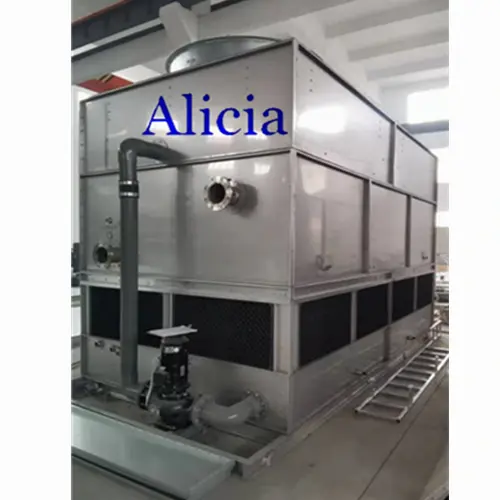 Why are closed-circuit cooling towers needed to make cheese?
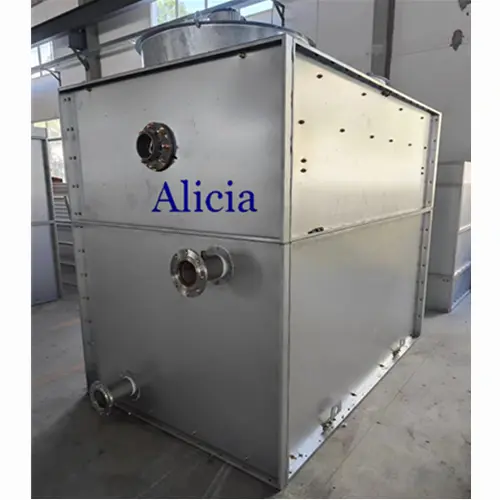 closed-circuit cooling tower systems for process cooling applications
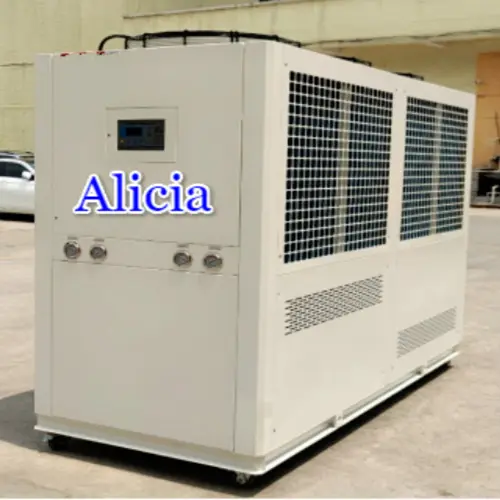 How are chillers used in the cosmetics manufacturing industry?
 How are water chillers used in the detergent manufacturing industry?
