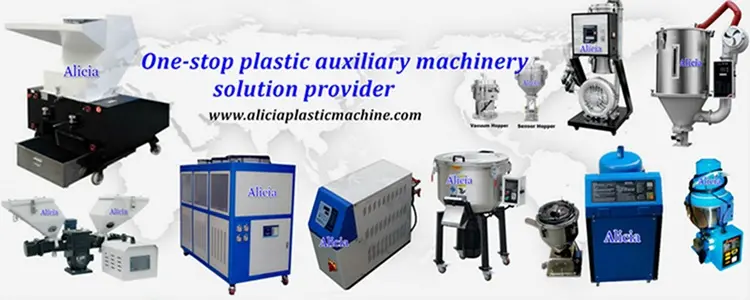
HDPE pipe, that is, high-density polyethylene pipe, its production process mainly includes the following steps, and a variety of plastic auxiliary equipment is required in the production process to ensure the smooth progress of production and product quality.
HDPE pipe production process
Raw material preparation: Select high-density polyethylene (HDPE) resin particles that meet the requirements as the main raw material. According to the product performance requirements, appropriate additives such as antioxidants, UV absorbers, masterbatches, etc. may be added to improve the performance and appearance of the pipe. These additives can improve the aging resistance, weather resistance and color stability of the pipe.
Extrusion molding: Add the prepared raw materials to the hopper of the extruder, and the raw materials are heated and melted in the barrel of the extruder. The screw of the extruder rotates to push the material forward, while stirring and compacting the material to achieve a uniform molten state. Then, the molten material is extruded through the head mold of the extruder to form a tubular billet. During the extrusion process, parameters such as extrusion temperature, pressure and screw speed need to be accurately controlled to ensure the dimensional accuracy and quality stability of the pipe.
Cooling and shaping: The extruded tubular blank is cooled and shaped by a cooling water tank. The water in the cooling water tank is usually kept at a low temperature, and the heat on the surface of the pipe is taken away by the circulating flow, so that the pipe is quickly cooled and solidified to form a stable shape. In order to improve the cooling effect, some additives such as corrosion inhibitors and bactericides are sometimes added to the cooling water to prevent rust and bacteria from growing on the surface of the pipe.
Traction cutting: The pipe after cooling and shaping is pulled forward by the traction machine at a certain speed. The traction speed must match the extrusion speed to ensure the dimensional accuracy of the pipe. When the pipe reaches the specified length, the cutting machine cuts the pipe to obtain the required length of the pipe product.
Quality inspection: The quality inspection of the produced HDPE pipe includes appearance inspection, size measurement, physical property test, etc. The appearance inspection mainly checks whether the surface of the pipe is smooth, whether there are bubbles, cracks, scratches and other defects; the size measurement includes whether the outer diameter, wall thickness, length and other indicators of the pipe meet the standard requirements; the physical property test includes tensile strength, ring stiffness, flexibility and other aspects of the test to ensure that the performance of the pipe meets the use requirements.
Packaging and warehousing: Pipes that have passed quality inspection are packaged according to certain specifications and quantities, usually in plastic film or woven bags to prevent damage during transportation and storage. The packaged pipes are stored in the warehouse and wait for shipment and sale.
Feeder: It is used to transport raw materials such as HDPE resin particles from storage containers to the hopper of the extruder. Common feeders include vacuum feeders and screw feeders. The vacuum feeder sucks the raw materials into the pipeline through vacuum suction and then transports them to the hopper. It has the advantages of cleanliness, high efficiency and high degree of automation; the screw feeder pushes the raw materials forward through the rotating spiral blades, which is suitable for conveying various powdered and granular materials.
Plastic Dryer Machines: If the raw materials absorb a certain amount of moisture during storage, or there are strict requirements on the moisture content of the pipes, a dryer is needed to dry the raw materials. The dryer usually uses hot air circulation to evaporate the moisture in the raw materials to improve the quality and performance of the pipes. Common dryers include oven dryers, dehumidifying dryers, etc.
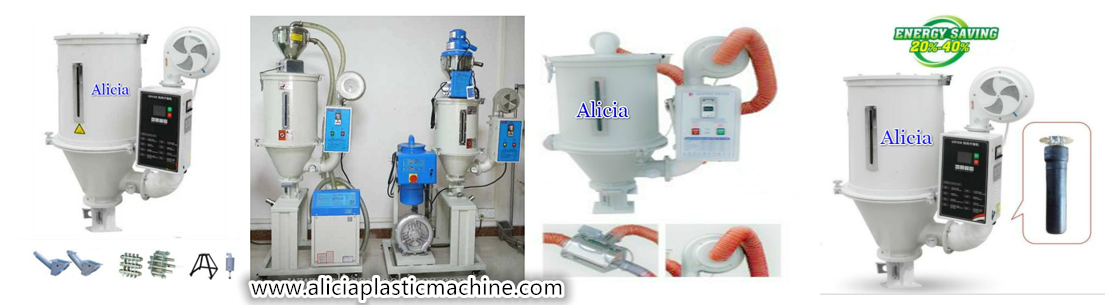
Plastic Mixer Machines: used to evenly mix HDPE resin particles with additives. The mixer usually has a stirring blade or a rotating container to fully mix the materials by stirring and turning. According to different mixing requirements, the mixer can be divided into low-speed mixers, high-speed mixers and other types. High-speed mixers have better mixing effects and can make the materials reach a uniform mixing state in a shorter time.

Mold: The extruder head mold is one of the key components of HDPE pipe production, which determines the shape, size and surface quality of the pipe. The design and manufacture of the mold requires precise processing technology and strict quality control to ensure the dimensional accuracy and appearance quality of the pipe. In addition, it is also necessary to equip the corresponding shaping mold and traction mold according to different pipe specifications and requirements to ensure the shape and size stability of the pipe during cooling, shaping and traction.
Cooling equipment: In addition to the cooling water tank, other cooling equipment may also be required, such as air coolers, spray cooling devices, etc. The air cooler blows cold air to the surface of the pipe through a fan to achieve auxiliary cooling; the spray cooling device sprays water mist on the surface of the pipe to improve the cooling efficiency. These cooling devices can be used in combination according to the production speed and cooling requirements of the pipe to achieve the best cooling effect.

Tractor: The function of the tractor is to pull the cooled and shaped pipe forward at a stable speed to ensure the straightness and dimensional accuracy of the pipe during the production process. The tractor usually adopts a rubber track or roller structure to drive the pipe forward by clamping the surface of the pipe and applying a certain traction force. The traction speed of the tractor can be adjusted according to the extrusion speed to ensure the uniformity of the wall thickness and length accuracy of the pipe.
Cutting machine: It is used to cut the pulled pipe according to the specified length. There are many types of cutting machines, such as saw blade cutting machine, rotary knife cutting machine, laser cutting machine, etc. Saw blade cutting machines are suitable for cutting larger diameter pipes, with faster cutting speed, but the cuts may have certain burrs; rotary knife cutting machines are suitable for cutting small and medium diameter pipes, with better cut quality; laser cutting machines have the advantages of high cutting accuracy, smooth cuts, and no burrs, but the equipment cost is relatively high.
Testing equipment: In order to ensure the quality of pipes, various testing equipment is needed to test the pipes. Common testing equipment includes dimensional measuring tools such as calipers and micrometers, which are used to measure the outer diameter, wall thickness and other dimensions of pipes; tensile testing machines are used to test the tensile strength and elongation at break of pipes; ring stiffness testing machines are used to test the ring stiffness performance of pipes; in addition, there are non-destructive testing equipment such as ultrasonic detectors and X-ray detectors to detect defects and quality problems inside pipes.
Recycling equipment: In the production process of HDPE pipes, some scraps and unqualified products will be produced, and recycling equipment is needed to recycle these waste materials. Recycling equipment usually includes crushers, granulators, etc. The crusher breaks the waste into small pieces, and then the crushed waste is reprocessed into granules through the granulator so that it can be used again in pipe production, thereby reducing production costs and reducing resource waste.


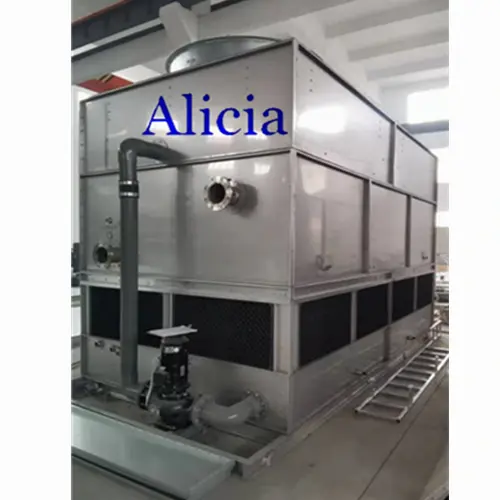 Why are closed-circuit cooling towers needed to make cheese?
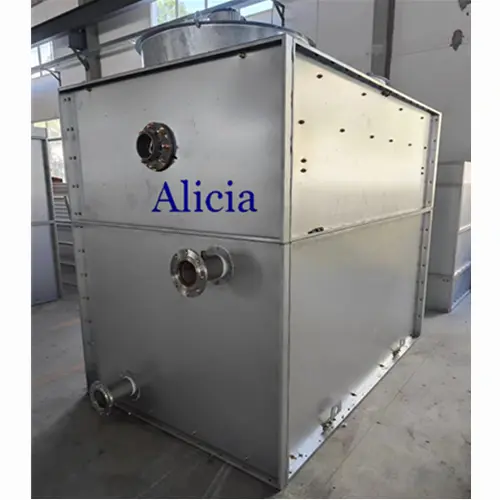 closed-circuit cooling tower systems for process cooling applications
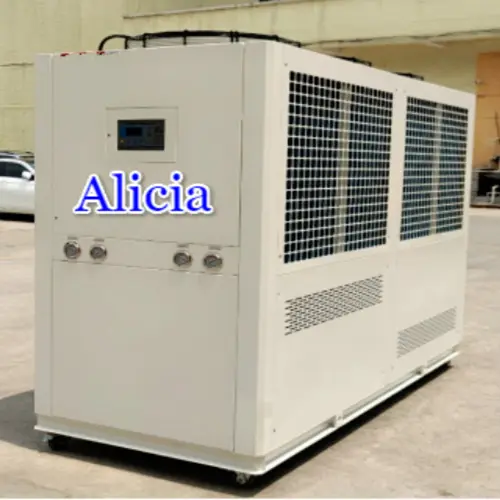 How are chillers used in the cosmetics manufacturing industry?
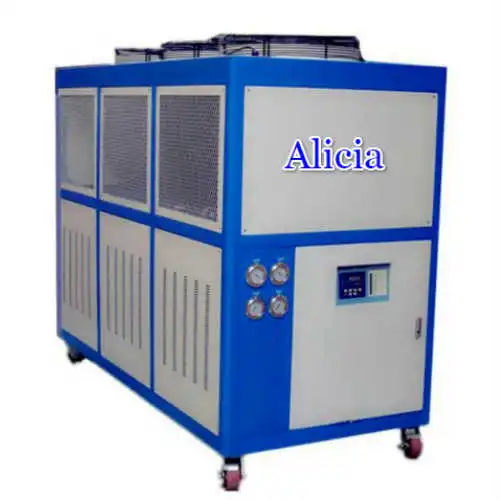 How are water chillers used in the detergent manufacturing industry?