How is XPS Foam Board manufactured?
XPS foam board, that is, extruded polystyrene foam board, is a thermal insulation material with superior performance. The following is relevant information about the manufacturing of XPS foam board:
Raw material preparation
Polystyrene resin: It is the main raw material of XPS foam board, generally using high impact polystyrene (HIPS), which has good processing performance and physical properties.
Foaming agent: Commonly used foaming agents include hydrofluorocarbons (HFCs), etc., which decompose and produce gas under heating and pressure conditions to form a microporous structure of polystyrene resin.
Other additives: including flame retardants, antioxidants, ultraviolet absorbers, etc., which can be added according to product performance requirements to improve the flame retardancy and aging resistance of foam boards.
Production process
Pre-foaming: Mix polystyrene resin particles with foaming agent and add them to the pre-foaming machine. Under the action of heating and stirring, the foaming agent penetrates into the polystyrene particles, causing the particles to expand to form pre-foamed particles. During the pre-foaming process, parameters such as temperature, pressure and time need to be controlled to obtain uniform pre-foamed particles.
Ripening: The pre-foamed particles need to be conditioned, that is, the pre-foamed particles are placed in the air for a period of time to allow the foaming agent inside to fully diffuse and evenly diffuse, and at the same time make the particles have better elasticity and stability. The aging time is generally 8-24 hours.
Molding: The matured pre-foamed particles are added to the mold, and the particles are further expanded and fused with each other by steam heating or hot air heating to form an XPS foam board with a certain shape and size. The heating temperature, pressure and time need to be controlled during the molding process to ensure that the density, strength and other properties of the foam board meet the requirements.
Cutting: The molded XPS foam board usually needs to be cut to meet the size requirements of different application scenarios. There are many cutting methods, such as mechanical cutting, electric heating wire cutting, etc.
What are the
plastic auxiliary equipment needed for the manufacture of XPS foam boards?
A variety of plastic auxiliary equipment is needed in the manufacturing process of XPS foam boards. The following are some common equipment and their functions:

Auto Feeder: used to automatically transport raw materials such as polystyrene resin particles to the production equipment. Its function is to realize the automatic feeding of raw materials, improve production efficiency, reduce the workload of manual handling and feeding, and at the same time ensure the accuracy and stability of feeding, and ensure the continuity of the production process.
Metering device: accurately measure and control the amount of raw materials, including polystyrene resin, foaming agent, additives, etc. Through accurate metering, it can ensure that each raw material is mixed in a certain proportion, thereby stabilizing the product quality and ensuring the performance consistency of the XPS foam board.
Plastic Mixer: fully mix raw materials such as polystyrene resin particles, foaming agents, additives, etc. Evenly distribute various raw materials before entering the subsequent processing procedures, which is conducive to achieving uniform foaming and stable performance during the production process, and avoiding performance differences in products due to uneven mixing of raw materials.

Extruder: It is one of the key equipment for the production of XPS foam boards. It heats, pressurizes, plasticizes the mixed raw materials through the rotation of the screw, and extrude them into a slab with a certain shape and size. Parameters such as the temperature, pressure and screw speed of the extruder have an important influence on the quality and performance of the foam board, and can control the density, thickness and surface quality of the foam board.
Mold: Used in conjunction with the extruder, it determines the final shape and size of the XPS foam board. The design and manufacturing accuracy of the mold directly affect the appearance quality and dimensional accuracy of the foam board. Through molds of different shapes and sizes, various specifications of XPS foam boards can be produced to meet the needs of different customers.
Tractor: After the extruder extrude the slab, the tractor is used to smoothly pull the slab out of the mold and convey it at the set speed and direction. It can control the pulling speed of the foam board to match the extrusion speed of the extruder, ensure the stability of the foam board during the molding process, and avoid problems such as tensile deformation or uneven thickness.
Cutting machine: Cut the continuously extruded XPS foam board into the required length and width. The cutting machine can accurately cut according to the set size to ensure the dimensional accuracy of the product. At the same time, it can also cut the foam board into different shapes, such as right-angle cutting, bevel cutting, etc., to meet the needs of different engineering installations.
Cooling equipment: used to cool and shape the extruded XPS foam board. Usually, air cooling or water cooling is used to quickly reduce the temperature of the foam board, fix the internal pore structure, improve the strength and stability of the foam board, and prevent deformation and other problems during subsequent processing and use.

Packaging machine: Pack the produced XPS foam board. Its function is to neatly stack and package the foam board to protect the product from damage during transportation and storage. It also facilitates the handling and sales of the product, and improves the added value and market competitiveness of the product.


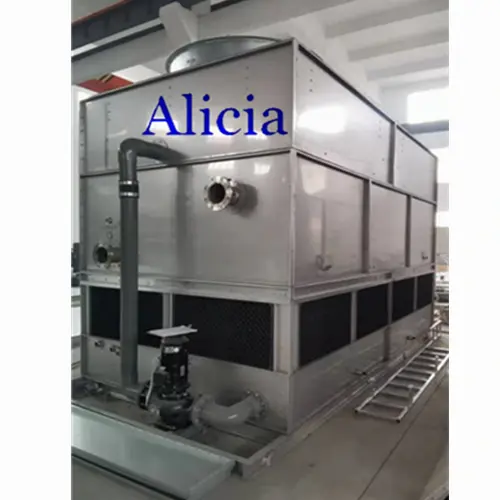 Why are closed-circuit cooling towers needed to make cheese?
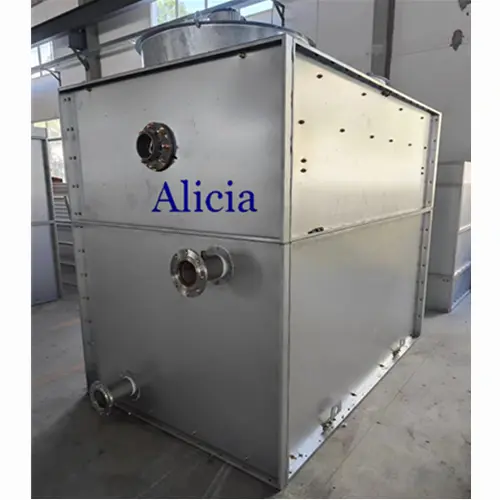 closed-circuit cooling tower systems for process cooling applications
 How are chillers used in the cosmetics manufacturing industry?
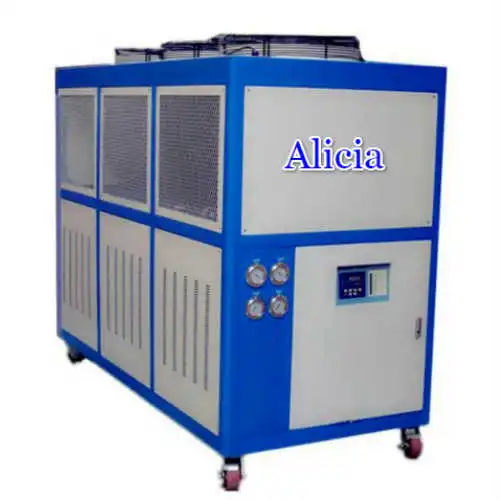 How are water chillers used in the detergent manufacturing industry?


