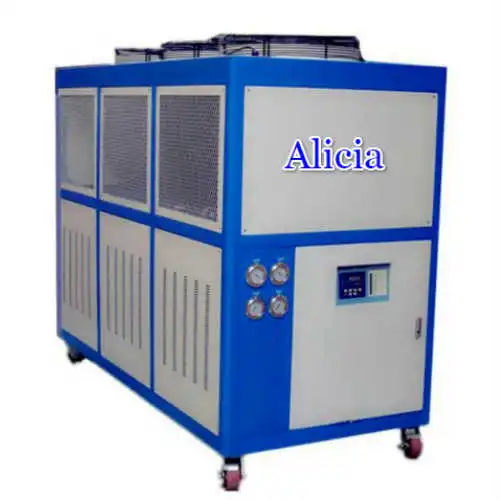
Sea salt production water chillers are mainly used in the cooling and crystallization process of brine in sea salt manufacturing. The following are its specific functions and working methods: c
ooling brine, controlling the crystallization process, improve production efficiency, energy saving and environmental protection.
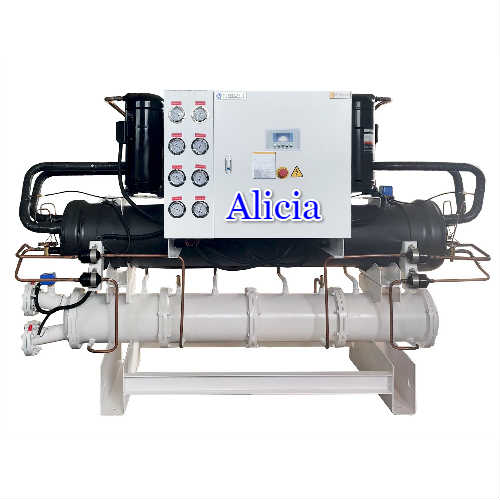
Cooling brine
Sea salt manufacturing obtains salt by evaporating seawater or brine. After the brine evaporates and concentrates to a certain extent, the temperature of the brine needs to be lowered to promote the crystallization of salt. The role of the sea salt production water chiller is to provide a low-temperature cooling medium, usually low-temperature water or low-temperature refrigerant, to take away the heat of the brine through a heat exchanger to reduce the temperature of the brine.
Controlling the crystallization process
Accurately controlling the cooling rate and temperature of the brine is crucial to the crystallization quality and output of the salt. The sea salt production water chiller can accurately adjust the cooling temperature and flow rate according to the requirements of the production process, so that the brine can crystallize within a suitable temperature range, which helps to form salt crystals with larger particles and higher purity.
Improve production efficiency
Rapidly cooling brine through a sea salt production water chiller can accelerate the crystallization process of salt, shorten the production cycle, and improve the production efficiency of sea salt. At the same time, a stable low-temperature environment also helps to reduce the entrainment of impurities in salt crystals and improve the purity of salt.
Energy saving and environmental protection
Modern water
sea salt production water chillers usually have high energy utilization efficiency, which can reduce energy consumption and environmental impact while meeting cooling needs. Some sea salt production water chillers can also use environmentally friendly refrigerants to further reduce damage to the ozone layer and greenhouse gas emissions.
In the actual sea salt manufacturing process, sea salt production water chillers usually form a complete production system with evaporation pools, crystallization pools, brine pipelines and heat exchange equipment, and work together to achieve efficient and high-quality production of sea salt.


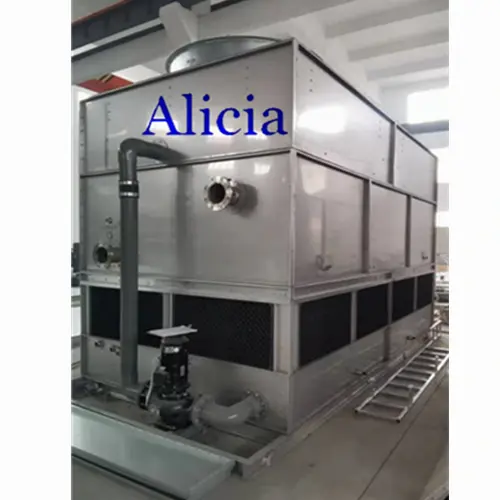 Why are closed-circuit cooling towers needed to make cheese?
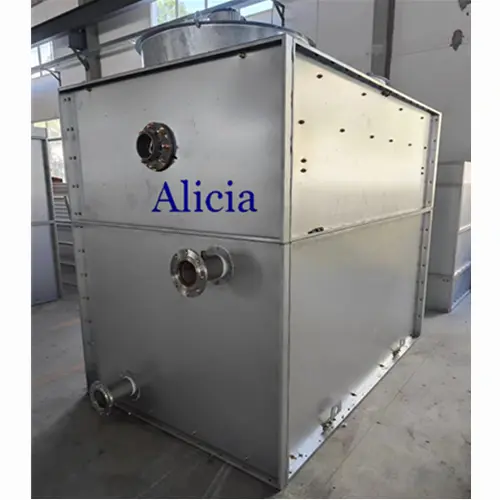 closed-circuit cooling tower systems for process cooling applications
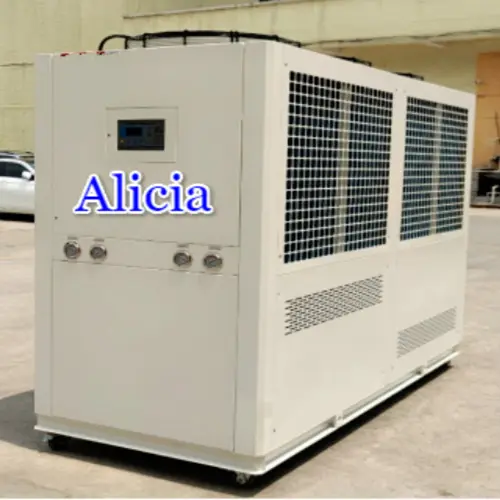 How are chillers used in the cosmetics manufacturing industry?
 How are water chillers used in the detergent manufacturing industry?
