Choosing a suitable
brine water chiller is crucial for sea salt production. It is necessary to comprehensively consider multiple aspects such as cooling capacity, cooling temperature, water quality adaptability, etc. The following are specific points:

Cooling capacity
Calculation basis: Determine the required cooling capacity based on factors such as the evaporation amount, crystallization rate and production scale of brine in sea salt production. Generally speaking, large-scale sea salt production plants require
brine water chillers with larger cooling capacity to meet the cooling needs of large amounts of brine.
Reference indicators: You can refer to the technical parameters of sea salt production equipment, or estimate the volume of brine that needs to be cooled per hour and the temperature that needs to be lowered based on previous production experience, so as to calculate the approximate cooling capacity requirements. For example, if 10 cubic meters of brine needs to be cooled from 35℃ to 20℃ per hour, you need to choose a
sea salt production water chiller with a cooling capacity that can meet this cooling demand.
Cooling temperature
Process requirements: The crystallization temperature of brine in sea salt production is usually within a certain range, generally around 20℃ - 30℃, and the specific temperature depends on the composition of the brine and the production process. Therefore, it is necessary to select a sea salt production water chiller that can cool the brine to this temperature range.
Temperature stability: In addition to meeting the basic refrigeration temperature requirements, the sea salt production water chiller should also have good temperature stability to ensure that the temperature fluctuation of the brine is small during the crystallization process, thereby ensuring the quality and output of the salt crystals.
Water quality adaptability
Corrosion resistance: Since sea salt water is highly corrosive, the evaporator, condenser and other parts of the sea salt production water chiller that come into contact with brine should be made of corrosion-resistant materials, such as stainless steel, titanium alloy, etc. This can extend the service life of the sea salt production water chiller and reduce maintenance costs.
Water quality filtration: In order to prevent impurities and salt in sea water from clogging the pipes of the sea salt production water chiller and affecting the refrigeration effect, a suitable water quality filtration system is required. The sea salt production water chiller should have a certain ability to adapt to water quality and be able to operate stably in the filtered sea salt water environment.
Operation stability
Reliability: Sea salt production is usually carried out continuously, so the
sea salt production water chiller needs to have high reliability and be able to operate stably for a long time. Choosing brands and models with a good reputation and mature technology can reduce the risk of equipment failure and ensure the continuity of production.
Maintenance: The convenience of the sea salt production water chiller's maintenance is also a factor to consider. An easy-to-maintain sea salt production water chiller can reduce downtime and maintenance costs. For example, the structural design of the equipment should be convenient for maintenance personnel to replace and clean components, and it should have a complete fault diagnosis and alarm system to detect and solve problems in a timely manner.
Energy efficiency
Energy-saving performance: Choosing a sea salt production water chiller with high energy efficiency can reduce operating costs and energy consumption. The energy efficiency ratio (COP) of the sea salt production water chiller can be used as a reference to evaluate its energy-saving performance. Generally speaking, the higher the COP value, the better the energy-saving effect of the sea salt production water chiller.
Operation mode: Some sea salt production water chillers have multiple operation modes, which can automatically adjust the cooling capacity and operating power according to changes in production load to achieve energy-saving operation. For example, in the off-season of sea salt production or when the brine output is low, the sea salt production water chiller can automatically reduce the operating power to avoid energy waste.
Safety performance
Protection device: The sea salt production water chiller should have complete safety protection devices, such as overload protection, leakage protection, high and low voltage protection, etc., to ensure the safety of equipment and personnel. These protective devices can shut down the equipment in time when an abnormal situation occurs, avoiding safety accidents.
Refrigerant safety: Choosing safe and reliable refrigerants is also an important consideration. Some refrigerants are flammable, explosive or toxic, and special attention should be paid to safety during use. Refrigerants that meet national safety standards and are environmentally friendly should be selected, such as R410A, R134a, etc.
Equipment scale and layout
Space requirements: According to the actual space size of the sea salt production site, select a sea salt production water chiller of appropriate size and structure. For production sites with limited space, a compact sea salt production water chiller should be selected for better installation and layout.
Multiple combinations: In large-scale sea salt production, multiple sea salt production water chillers may be required for combination. At this time, it is necessary to consider the collaborative working ability and layout rationality between sea salt production water chillers to achieve the best cooling effect and energy utilization efficiency.


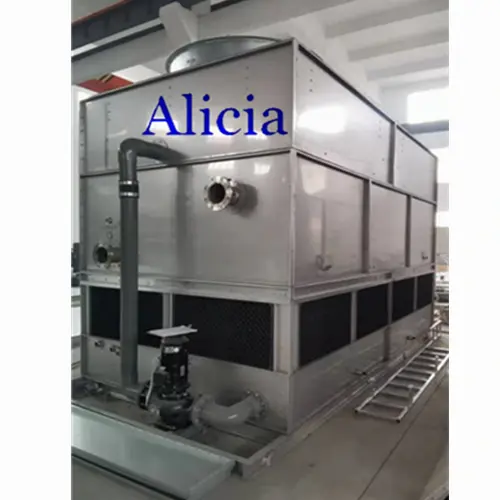 Why are closed-circuit cooling towers needed to make cheese?
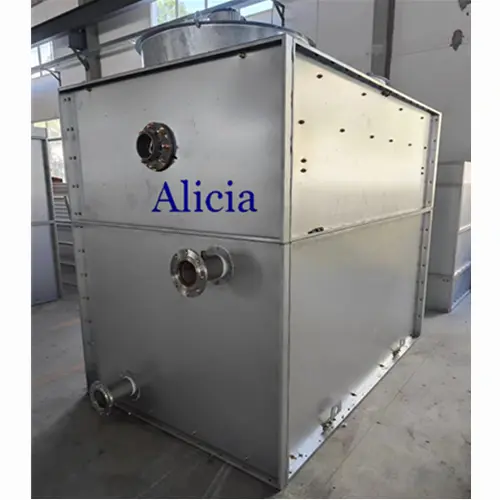 closed-circuit cooling tower systems for process cooling applications
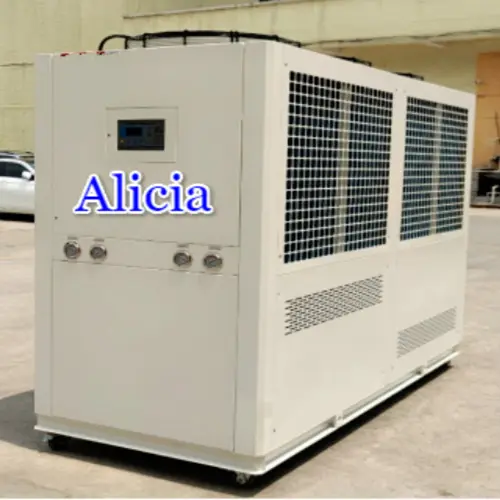 How are chillers used in the cosmetics manufacturing industry?
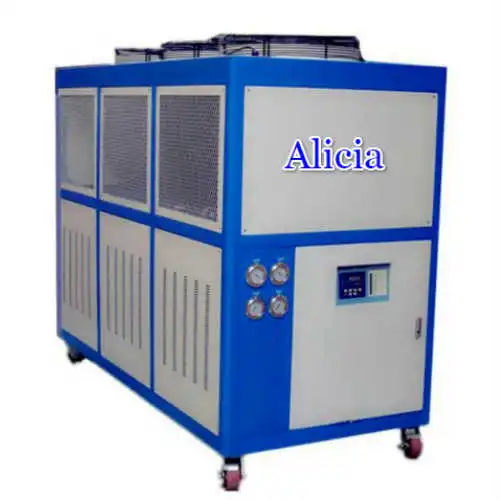 How are water chillers used in the detergent manufacturing industry?
